

3rd edition · Co-Located with SANER 2027
FAIRNESS 2027 : 3rd International Workshop on Fairness in Software Systems
- Richmond, Virginia, USA
- Co-located with SANER 2027
- Abstract deadline: 19 Oct 2026
Software fairness is the practice of ensuring systems, algorithms, and their outcomes are just and unbiased across groups of people, regardless of race, gender, ethnicity, or socioeconomic status. As software increasingly mediates work, education, and public life — and as large language models and autonomous coding agents take on greater roles in building that software — understanding and mitigating bias throughout the development lifecycle has become a first-order concern for the field.
FAIRNESS brings together academics, industrial researchers, and practitioners to exchange experiences, solutions, and new ideas on methods, techniques, and tools for advancing software fairness, from bias detection in ML models to fairness debt and the emerging challenges of agentic, LLM-based systems.
Topics of interest (not limited to)
10 areas
-
01
Bias in ML models
Detecting and mitigating bias in training data and deployed systems.
-
02
Fairness in AI and ML
Definitions, metrics, and fairness-aware algorithms.
-
03
Ethical implications
Ethical considerations and societal impact of unfair software.
-
04
Transparency and accountability
Explainability, auditing, and accountability mechanisms.
-
05
Data collection and preprocessing
Unbiased, representative data and fairness-aware preprocessing.
-
06
Fairness in HCI
Inclusive interface design and user trust in fair AI.
-
07
Fairness in the SDLC
Integrating fairness checks across the development process.
-
08
Evaluating and benchmarking fairness
Datasets, benchmarks, and comparative studies.
-
09
Software fairness debt
Measuring, managing, and remediating fairness debt.
-
10
Fairness in LLM-based and agentic systems
Bias in coding/requirements agents and multi-agent decision-making.
Important dates
- 19 Oct 2026 Abstract submission (mandatory)
- 23 Oct 2026 Paper submission deadline
- 08 Dec 2026 Notifications
- 08 Jan 2027 Author registration deadline
- 08 Jan 2027 Camera-ready deadline
Submissions
-
5–8 pages
Full paper
Original research on the workshop’s topics.
-
4 pages
Short paper
Visions, novel ideas, and experience reports.
-
2 pages
Position paper
Forward-looking perspectives on software fairness.
All submissions undergo double-anonymous peer review, assessing soundness, significance, novelty, verifiability, and presentation quality.
Submission instructions
Same policies as SANER 2027
FAIRNESS 2027 follows the same submission, review, and publication policies as the SANER 2027 main conference. Please review these carefully before submitting.
Formatting
PDF only, IEEE Conference Proceedings format: 24pt title, 10pt body text. LaTeX authors must use \documentclass[10pt,conference]{IEEEtran} (no compsoc/compsocconf option). Papers must not have been previously published or be under concurrent review elsewhere.
Double-anonymous review
Omit author names, affiliations, and identifying acknowledgments. Cite your own prior work in the third person. Anonymize project names, repository links, and organization names that could reveal identity. Submissions violating these rules are desk-rejected without review.
Use of generative AI
Submissions must comply with the IEEE Submission and Peer Review Policy and the ACM Policy on Authorship, including their provisions on the use of generative AI tools (e.g., ChatGPT).
Open science
We encourage disclosing anonymized data and artifacts to support reproducibility. Papers should include a Data Availability statement after the conclusions, describing how artifacts can be accessed or why this is not possible.
Accepted papers are included in the IEEE Digital Library as part of the SANER 2027 companion proceedings, provided at least one author registers (full, non-student registration) and presents the paper. The author list and title cannot be changed after acceptance, except for title clarifications approved by the workshop chairs.
Organizing committee
-
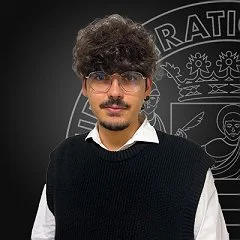
Gianmario Voria
University of Salerno, Italy
gvoria@unisa.it -

Qiaolin Qin
Polytechnique Montréal, Canada
qiaolin.qin@etud.polymtl.ca -

Maria Teresa Baldassarre
University of Bari, Italy
mariateresa.baldassarre@uniba.it
Web and Publicity Chair
-
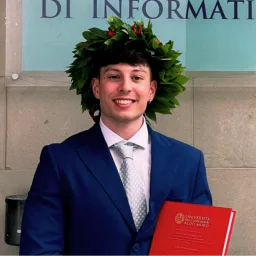
Vito Bavaro
University of Bari, Italy
v.bavaro4@phd.uniba.it
Program committee
To be announced
- TBD, TBD
Contact
Questions about the workshop, submissions, or the program can be sent to any of the organizers above